

Community Centered Media
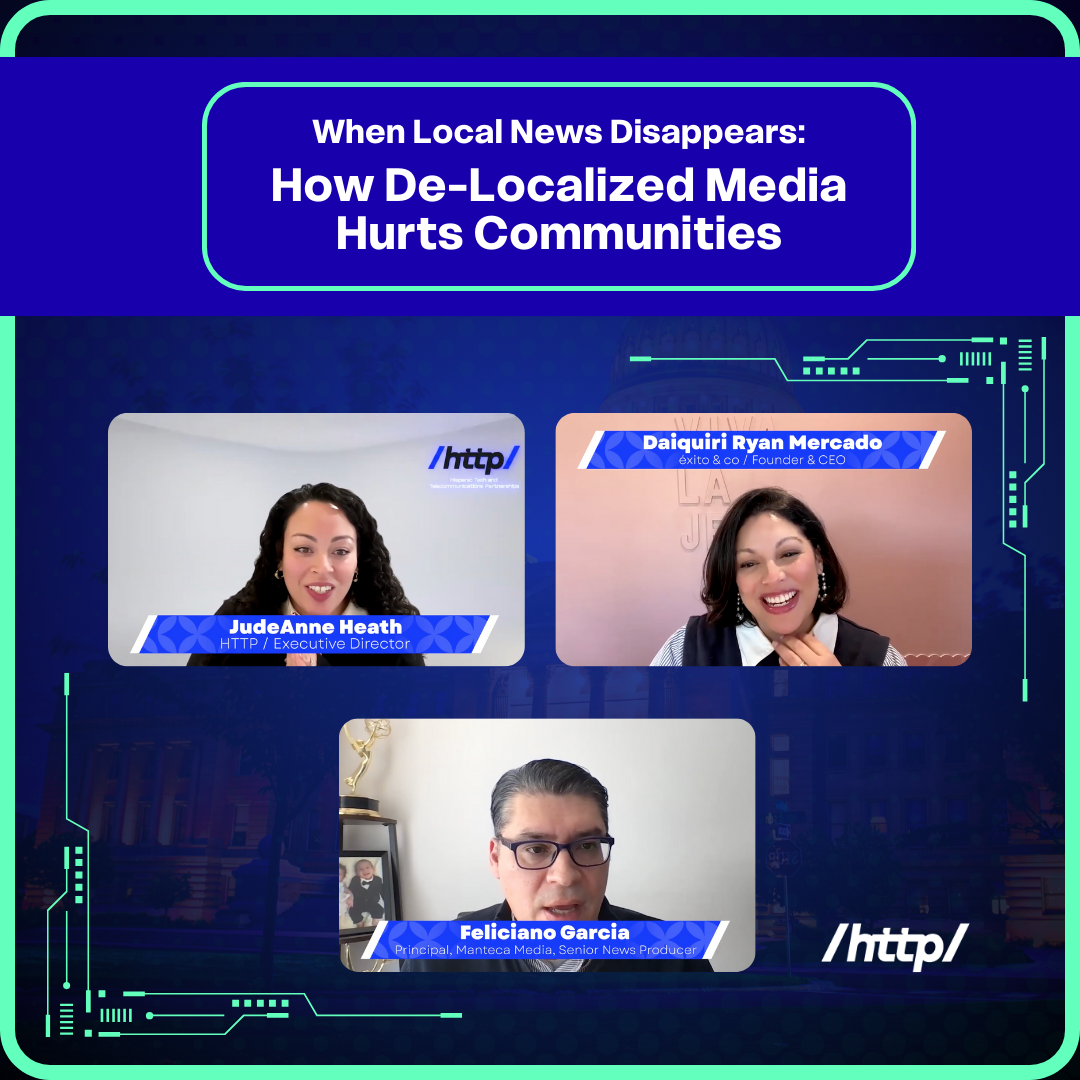
Local media plays a critical role in informing communities, supporting civic participation, and ensuring people have access to timely, trusted information. As media production, editorial control, and distribution become increasingly centralized, many communities are experiencing the erosion of local information ecosystems, a shift away from locally rooted reporting toward nationally produced or platform-driven content.
Learn more about this hub
-
Local media is essential infrastructure for healthy communities. It keeps residents informed, supports civic participation, and provides timely, trusted information about local government, public safety, education, health, and economic conditions. When reporting is rooted in the communities it serves, it strengthens accountability and helps people make informed decisions about the issues that affect their daily lives.
However, increasing consolidation of media ownership has shifted production and editorial control away from local newsrooms and toward centralized or nationally driven models. This change has accelerated the growth of news deserts, reduced the number of journalists embedded in communities, and led to more uniform content that often overlooks local priorities. As local coverage declines, trust erodes and gaps in reliable information grow.
These trends also make communities more vulnerable to misinformation and weaken civic life. Fewer local voices, limited representation in ownership and leadership, and reduced access to culturally relevant reporting leave many households without dependable sources of news and emergency information. Preserving local, community-serving media is critical to maintaining accountability, representation, and a well-informed public.
-
This section outlines the challenges facing community-centered media, including consolidation, newsroom closures, content homogenization, and declining ownership diversity. It also explains how these trends affect representation, local accountability, and access to trusted information, and provides research, policy context, and resources to support efforts that strengthen and sustain local journalism.
How This Impacts Communities
HOMOGENIZATION OF CONTENT AND THE EROSION OF LOCAL JOURNALISM
Content homogenization and the erosion of local journalism occur when local news production, editorial decision‑making, and staffing are centralized, often hundreds or thousands of miles away from the communities being covered. While stations may retain a local brand, the content increasingly reflects national or corporate priorities rather than local realities.
The result is fewer local voices, diminished accountability reporting, and a narrowing of perspectives available to the public. Trust in local news organizations remains higher than trust in national news organizations among Americans of all ages.
HOW MEDIA CONSOLIDATION FUELS MISINFORMATION AND WEAKENS CIVIC LIFE
Media consolidation can intensify the spread of misinformation (false or inaccurate information shared without intent to deceive), disinformation (false information deliberately spread to mislead), and malinformation (true information shared without context or with the intent to cause harm), particularly affecting underrepresented communities. As media consolidation causes more concentrated ownership, fewer newsrooms are responsible for covering broader audiences, often reducing culturally competent reporting and limiting perspectives that reflect the lived experiences of diverse populations.
This dynamic can weaken civic life by distorting public understanding of local issues, elections, and public institutions. Consolidation enables disinformation to be amplified across multiple outlets under common ownership, while the decline of trusted local journalism increases vulnerability to malinformation, as context and nuance are lost. For underrepresented communities, who already face gaps in media coverage, these trends can deepen mistrust, reduce civic participation, and further marginalize voices essential to a healthy democratic discourse.
IMPACT ON REPRESENTATION AND COMMUNITY-SERVING MEDIA
Media consolidation disproportionately harms underrepresented communities, including low-income, rural, Hispanic, and other historically underserved populations that rely most heavily on local and community-serving media.
The FCC’s own data demonstrate that ownership diversity is already scarce: women hold a majority stake in just 10% of broadcast stations, and Latinos in only 6%. As ownership continues to concentrate, community-serving outlets face declining investment, fewer employment pathways, and reduced editorial autonomy.
For many households, particularly those that depend on free, over-the-air or basic-tier television, local broadcast media remains a primary source of trusted news, emergency information, and public service content. When coverage is centralized or community-focused programming is displaced due to consolidation or carriage decisions, the impact is exclusionary, not merely inconvenient.
As a result, these communities are:
- Less likely to see issues affecting them covered in depth
- More likely to experience declining local newsroom employment
- Left with fewer pathways to media ownership or leadership
- Experience a reduction of journalism jobs
- Left with fewer authentic local voices that report on what is really happening in the communities
THE REGULATORY CONTEXT
U.S. media policy has long recognized that broadcast spectrum is a public good and that limits on excessive media consolidation are essential to protecting competition, localism, viewpoint diversity, and accountability.
One of the most important safeguards is the national television ownership cap, which limits how much of the national audience a single company may reach. This cap reflects clear Congressional intent to prevent excessive concentration in broadcast media.
Proposals to weaken or circumvent these safeguards, whether directly or through regulatory waivers, would significantly undermine long-standing public interest protections and accelerate the delocalization of local media.
How This Impacts Communities
-
Homogenization of Content and the Erosion of Local Journalism
Content homogenization and the erosion of local journalism occur when local news production, editorial decision‑making, and staffing are centralized, often hundreds or thousands of miles away from the communities being covered. While stations may retain a local brand, the content increasingly reflects national or corporate priorities rather than local realities.
The result is fewer local voices, diminished accountability reporting, and a narrowing of perspectives available to the public. Trust in local news organizations remains higher than trust in national news organizations among Americans of all ages.
-
How Media Consolidation Fuels Misinformation and Weakens Civic Life
Media consolidation can intensify the spread of misinformation (false or inaccurate information shared without intent to deceive), disinformation (false information deliberately spread to mislead), and malinformation (true information shared without context or with the intent to cause harm), particularly affecting underrepresented communities. As media consolidation causes more concentrated ownership, fewer newsrooms are responsible for covering broader audiences, often reducing culturally competent reporting and limiting perspectives that reflect the lived experiences of diverse populations.
This dynamic can weaken civic life by distorting public understanding of local issues, elections, and public institutions. Consolidation enables disinformation to be amplified across multiple outlets under common ownership, while the decline of trusted local journalism increases vulnerability to malinformation, as context and nuance are lost. For underrepresented communities, who already face gaps in media coverage, these trends can deepen mistrust, reduce civic participation, and further marginalize voices essential to a healthy democratic discourse.
-
Impact on Representation and Community-Serving Media
Media consolidation disproportionately harms underrepresented communities, including low-income, rural, Hispanic, and other historically underserved populations that rely most heavily on local and community-serving media.
The FCC’s own data demonstrate that ownership diversity is already scarce: women hold a majority stake in just 10% of broadcast stations, and Latinos in only 6%. As ownership continues to concentrate, community-serving outlets face declining investment, fewer employment pathways, and reduced editorial autonomy.
For many households, particularly those that depend on free, over-the-air or basic-tier television, local broadcast media remains a primary source of trusted news, emergency information, and public service content. When coverage is centralized or community-focused programming is displaced due to consolidation or carriage decisions, the impact is exclusionary, not merely inconvenient.
As a result, these communities are:
– Less likely to see issues affecting them covered in depth
– More likely to experience declining local newsroom employment
– Left with fewer pathways to media ownership or leadership
– Experience a reduction of journalism jobs
– Left with fewer authentic local voices that report on what is really happening in the communities
-
The Regulatory Context
U.S. media policy has long recognized that broadcast spectrum is a public good and that limits on excessive media consolidation are essential to protecting competition, localism, viewpoint diversity, and accountability.
One of the most important safeguards is the national television ownership cap, which limits how much of the national audience a single company may reach. This cap reflects clear Congressional intent to prevent excessive concentration in broadcast media.
Proposals to weaken or circumvent these safeguards, whether directly or through regulatory waivers, would significantly undermine long-standing public interest protections and accelerate the delocalization of local media.
Resources


